Guide
Gran Canaria in winter: weather, Christmas and Carnival
Gran Canaria from November to March: highs of 20.8 to 24.2 °C per AEMET, sea at 19-22 °C, Christmas in Las Palmas, Carnival from 22 January to 28 February.
In short
Gran Canaria stays mild in winter: according to AEMET (airport, 1981-2010) average highs run from 20.8 °C in January to 24.2 °C in November, with 2 to 4.5 rainy days a month. The sea is around 19-22 °C depending on the month. There is a sand nativity scene at Las Canteras at Christmas, and the 2027 Las Palmas Carnival runs from 22 January to 28 February. Calima and the cold on the summit are the main warnings.
For visitors from northern Europe, Gran Canaria in winter is above all a matter of light and mild temperatures: the coast stays around 20 °C at its highest, there are beaches, dunes and hiking, and the calendar fills with Christmas and, from late January, Carnival. This guide relies on AEMET’s normal values for Gran Canaria airport, on the east coast, which are representative of the low coastal area but not of the mid-altitude villages or the summit.
Times are Canary time, one hour behind mainland Spain. We give the 2027 dates as published by the city council and the press; the detailed programme of each event may come out later.
Climate from November to March: the AEMET figures
According to AEMET’s normal values for Gran Canaria Airport (1981-2010), the average temperature is 21.2 °C in November, 19.2 °C in December, 17.9 °C in January, 18.2 °C in February and 19.0 °C in March. Average highs are 24.2 °C, 22.2 °C, 20.8 °C, 21.2 °C and 22.3 °C, and average lows 18.1 °C, 16.2 °C, 15.0 °C, 15.0 °C and 15.7 °C, respectively.
Rain is scarce: 22 mm in November (3.9 rainy days), 31 mm in December (4.5 days), 25 mm in January (3.1), 24 mm in February (3.0) and 12 mm in March (2.3). Sunshine hours are 185 in November, 179 in December, 184 in January, 191 in February and 229 in March. December is therefore the wettest and least sunny of the five months.
The sea and swimming in winter
According to the averages of a sea-temperature portal, the water around Gran Canaria is about 22 °C in November, around 20.8 °C in December, 19.7-19.9 °C in January, 19 °C in February and between 18.8 and 19.2 °C in March. It is a cool swim rather than a warm one; for diving or long snorkelling a short or full wetsuit helps. These are the portal’s historical averages, not this year’s measurements.
We give no per-beach figures because we could not verify them in official sources. In wind or swell, check the beach flag before going in.
Christmas in Las Palmas and across the island
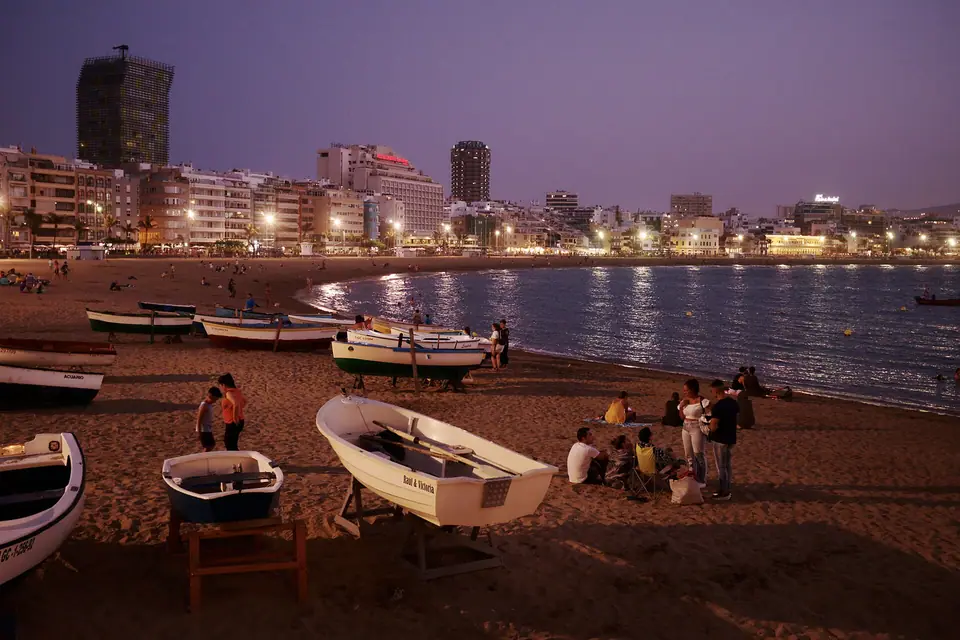
In Las Palmas the image of Christmas is the Belén de Arena (sand nativity scene) at Las Canteras, at La Puntilla, at the north end of the beach. In the 2025-26 edition, the twentieth, it opened on 15 December and was free to visit until 8 January. For 2026-27 no official dates have been published, so check the city council’s programme. An events listing puts the city’s Christmas programme between 26 November and 6 January, with the Three Kings parade on 5 January; in 2026 the parade brought together more than a thousand participants, according to RTVC.
Outside the capital, a festivals listing also cites Teror’s Christmas as an event of its own; we could not check this year’s programme.
Carnival 2027: Las Palmas and Maspalomas
Las Palmas de Gran Canaria’s city council has set Carnival 2027 from 22 January to 28 February, with the theme “Music”. Shrove Tuesday, a local holiday, falls on 9 February 2027. The Queen’s Gala will be on the eve of Shrove Tuesday and there will be a Grand Dame Gala on a Friday, drag events on two consecutive Fridays and a first weekend dedicated to children’s activities; the Great Parade and the Burial of the Sardine will be held on separate dates. The council has not yet published the exact day of each gala or of the parade.
The Maspalomas International Carnival 2027 has the allegory “Toy World”, chosen by public vote (402 of 680 votes). A local guide publishes the dates as 2 to 14 March 2027, with the Great Parade on Saturday the 13th, but we could not confirm them in an official source; the hub is the Yumbo shopping centre. In 2026 the carnival ran from 10 to 22 March and the parade was postponed from 21 to 28 March because of a storm, so allow some margin in the dates.
Calima, wind, cold and the north-south contrast
Calima is Saharan dust held in the air. The Canarian press distinguishes high-altitude calima, which tints the sky and reduces visibility, from surface calima, which raises the particles in the air: in that case the Canarian authorities advise avoiding prolonged exposure outdoors, keeping windows closed and not exercising outside, with particular care for sensitive people. In February 2026 AEMET activated the yellow warning for calima on all the islands; the worst episode remembered was in February 2020, with the airports closed for two days.
With the trade winds, the north of the island wakes up cloudier while the south is usually clear; the press puts the cloud up to about 900-1,200 metres on a typical day. If the north is grey, the south coast and the dunes are a good alternative. The summit is much colder: in isolated episodes snow has reached about 1,800-1,900 metres and roads have been closed, so take a coat and check AEMET’s warnings before you go up.
What is open and what to know
In winter the island works as normal: Global’s buses and the airport lines run all year, Las Canteras beach and the dunes can be visited as usual, and the summit villages stay open, although with less daylight and cooler air. Opening times for museums and places such as the Jardín Canario change on public holidays: one travel guide says this garden closes on 24, 25 and 31 December and 1 January, but we could not check this on the official website.
Nature activities deserve attention: Roque Nublo requires a reservation and has regulated hours; in the Maspalomas dunes you must stay on the paths. See our guides to both for details. Take a warm layer for the evening and for the summit.
Poema del Mar Aquarium ticket, Las Palmas
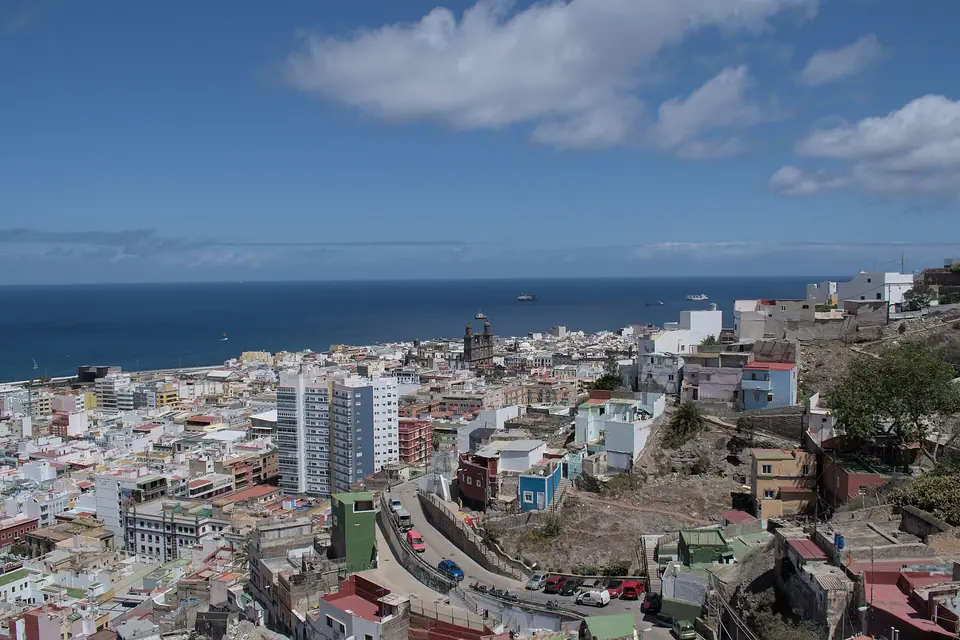
Modern aquarium at the Las Palmas harbour, a covered and easy plan for rainy or windy days.
Visit to the Casa de Colón, Vegueta
Museum in a historic Vegueta building on Columbus, Atlantic navigation and island history.
Google lists it as closed on Tuesdays
Visit to El Museo Canario, Vegueta
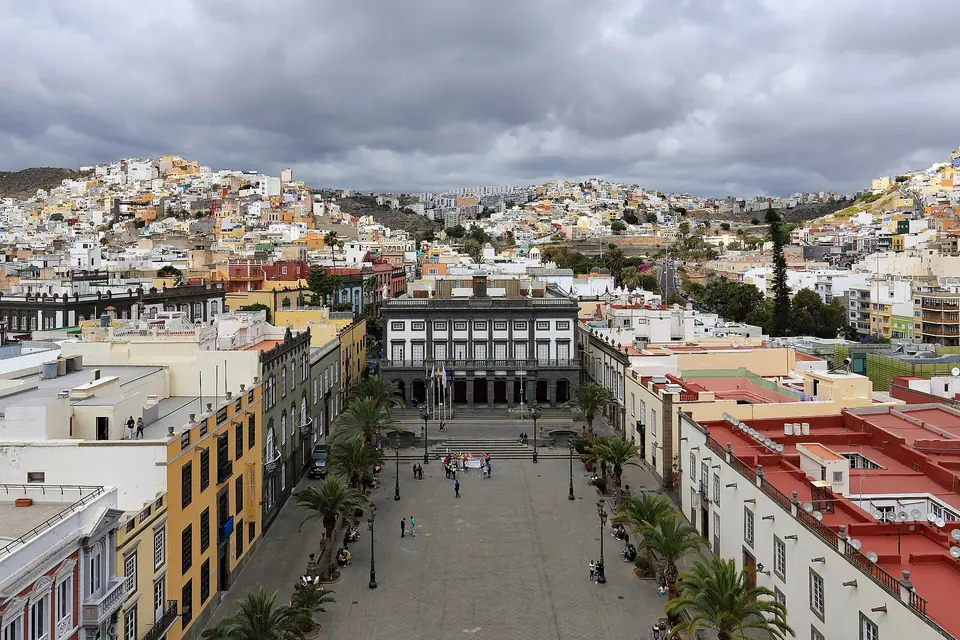
Archaeological and ethnographic collection in Vegueta to understand ancient Canarians' lives and rites.
Museo y Parque Arqueológico Cueva Pintada
Guided visit to the Painted Cave, Gáldar
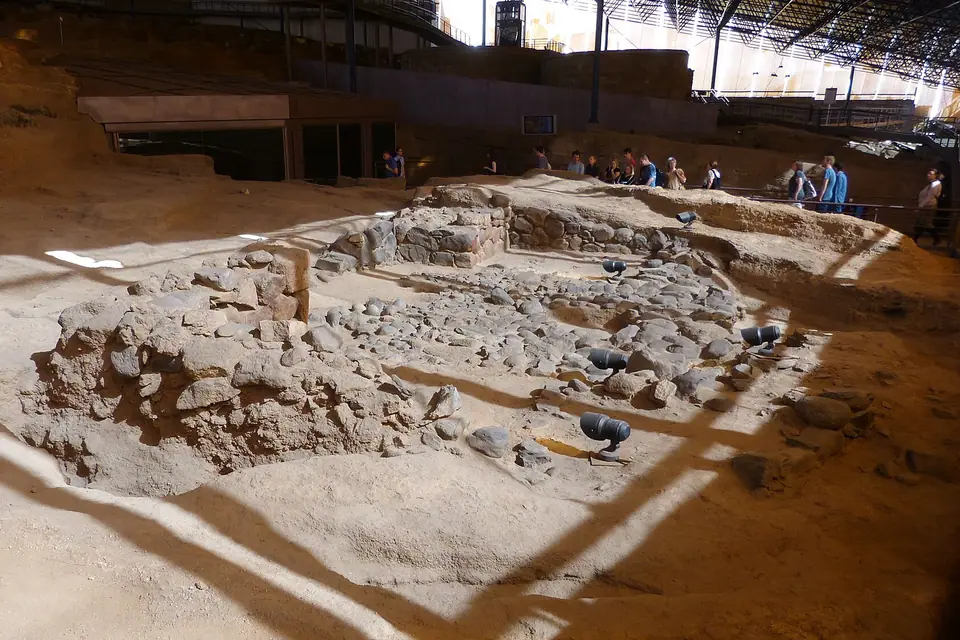
Guided tour of the Gáldar museum and archaeological site, one of the island's key pre-Hispanic places.
Google lists it as closed on Mondays
Guided tour of the Arehucas rum distillery, Arucas
Guided visit to an Arucas rum distillery with a rum and liqueur tasting, adults only.
Google lists it as closed on Saturdays and Sundays
Day pass with thalassotherapy circuit, Gloria San Agustín
Seawater circuit at the Gloria Palace San Agustín spa, booked by phone with the centre.
Official sources
Our own text, built on these sources as checked up to 25 November 2026. Rules and traffic restrictions change: check them before you travel.
- AEMET: normal climatological values, Gran Canaria Airport (1981-2010)
- Temperatura do mar: Gran Canaria sea temperature month by month
- RTVC: dates of the 2027 Las Palmas de Gran Canaria Carnival
- RTVC: 2027 Carnival theme and Shrove Tuesday on 9 February
- RTVC: “Toy World” will inspire the 2027 Maspalomas Carnival
- Local Guide Gran Canaria: Maspalomas Carnival (2027 dates, unconfirmed)
- RTVC: Maspalomas Carnival parade 2026
- Festivales de España: Maspalomas International Carnival
- RTVC: Las Canteras sand nativity scene, 20th edition
- Festivales de España: Christmas in Las Palmas de Gran Canaria
- RTVC: Three Kings parade in Las Palmas (5-01-2026)
- Festivales de España: Christmas in Teror
- RTVC: calima recommendations (18-04-2026)
- Diario de Avisos: calima in the Canaries, health recommendations (February 2026)
- RTVC: snow reaches Gran Canaria, Tenerife and La Palma
- Nomado Travel: Viera y Clavijo Botanical Garden (Christmas closures, unconfirmed)
Frequently asked questions
What is the weather like in Gran Canaria from November to March?
According to AEMET (Gran Canaria airport, 1981-2010), the average temperature runs from 17.9 °C in January to 21.2 °C in November, with average highs of 20.8 to 24.2 °C. December is the wettest (31 mm) and March the sunniest (229 hours).
Can you swim in winter?
Yes: according to the averages of a sea-temperature portal, the water runs from about 22 °C in November to between 18.8 and 19.2 °C in March. It is cool; for long activities a wetsuit is advisable.
When is the 2027 Las Palmas Carnival?
From 22 January to 28 February 2027, with Shrove Tuesday on 9 February and the theme “Music”, according to the city council. The dates of each gala and of the parade were not yet published.
Does it snow in Gran Canaria?
On the summit, exceptionally: the press has reported snow from about 1,800-1,900 metres and closed roads. Not on the coast.
What is calima and is it dangerous?
It is Saharan dust held in the air. At altitude it only reduces visibility; at surface level the authorities recommend avoiding outdoor exertion, especially for sensitive people.
Atlas de Gran Canaria editorial team · reviewed on 25 November 2026
More guides
- Maspalomas Dunes: rules, paths and how to get there
- Ferries from Gran Canaria: Agaete, Las Palmas and Cádiz
- Best beaches in Gran Canaria: how to choose
- What to see in Gran Canaria: five areas, one by one
- Roque Nublo: booking, parking, buses and warnings
- Gran Canaria in the rain: things to do
- Gran Canaria with kids: things to do
- Cheap or free things to do in Gran Canaria
- Easy, low-effort things to do on Gran Canaria